
Pipe Descaling in Los Angeles & Ventura County
Mechanical descaling with spinning metal chain knockers — scrape rust, scale, and mineral buildup from aging sewer lines without digging up your yard.
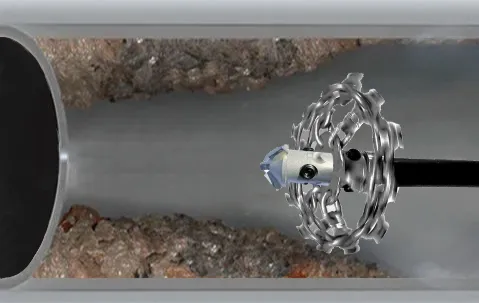
What Mechanical Descaling Does
Over decades, cast iron, clay, and concrete sewer pipes develop internal buildup — rust tuberculation, mineral scale, hardened grease, and calcium deposits that can narrow the pipe by half or more. A standard drain snake punches through a clog but leaves the pipe walls coated. Mechanical descaling removes that buildup entirely.
Every job starts with a camera inspection. We recommend descaling when the pipe is structurally sound but restricted by internal buildup — not when cracks, collapses, or joint failures require lining or replacement instead.
Chain Knockers and How They Work
We use a flexible-shaft machine fitted with a spinning metal chain — commonly called a chain knocker — that scrapes the interior walls as it travels through the line. The chain expands centrifugally against the pipe wall, grinding away scale and corrosion while the shaft feeds it forward from a clean-out access point. Debris is flushed out with water, and a follow-up camera run confirms the restored diameter.
Chain selection matters. Lighter chains handle routine scale in clay and concrete pipe. Heavier carbide-tipped chains tackle the thick rust tuberculation common in aging cast iron laterals throughout LA and Ventura County. We match the tool to the pipe material and condition so we restore flow without damaging fragile sections.
What Descaling Removes
- ✓Rust tuberculation and corrosion scale on cast iron pipe walls
- ✓Mineral deposits, lime scale, and calcium buildup
- ✓Hardened grease and fats (FOG) coating the interior
- ✓Residual concrete, mortar, or failed liner material
- ✓Root debris and organic buildup after mechanical cutting
Typical Pipe Types
Descaling is most common in cast iron and clay tile laterals — the standard materials in homes built before the 1970s across Southern California. It also works in concrete and Orangeburg pipe. PVC and other plastic lines rarely need descaling; when they do, we use gentler tooling to avoid scoring the wall.
The Descaling Process
Camera inspection
We document the buildup type, pipe material, and overall structural condition before choosing a chain.
Chain selection and setup
The chain diameter and aggressiveness are matched to the pipe size and material — cast iron with heavy scale gets a different tool than clay with light deposits.
Mechanical descaling
The spinning chain is fed through the line from the clean-out, scraping the interior walls as it advances. Multiple passes may be needed for heavy buildup.
Flush and verify
Loosened debris is flushed out with water. A post-descaling camera inspection confirms restored diameter and flow capacity.
When Descaling Is the Right Choice
Descaling alone restores flow when the pipe wall itself is still intact — no cracks, no joint failures, no active leaks. It is the right first step when recurring clogs trace back to scale and rust rather than structural damage.
When the camera shows cracks, root entry points, or leaking joints, descaling prepares the pipe for CIPP pipe lining. When the pipe is too deteriorated for either method, we recommend trenchless replacement instead.
Descaling does not fix a collapsed pipe, a severe belly in the line, or missing sections. We will tell you upfront when excavation or replacement is the better option.
Common Questions
What is mechanical pipe descaling?
Descaling uses a spinning metal chain — called a chain knocker — on a flexible shaft to scrape rust, mineral scale, grease, and corrosion buildup from the inside of a pipe. The chain expands against the pipe wall as it rotates, grinding away deposits that narrow the line. It is the most effective way to restore flow in aging cast iron and clay sewer laterals.
When do I need descaling vs. CIPP lining?
Descaling alone is enough when the pipe is structurally sound but restricted by internal buildup — common in cast iron lines with heavy rust scale. CIPP lining is needed when the pipe has cracks, leaks, or root entry points that require a structural fix. Many aging cast iron jobs need both: descaling first to clean the walls, then lining to seal and reinforce the pipe.
What pipe materials can be descaled?
Cast iron, clay tile, concrete, and Orangeburg are the most common candidates — especially in homes built before the 1970s. PVC and other plastic pipes rarely need descaling; when they do, we use gentler chains to avoid damaging the wall.
How is descaling different from hydro jetting?
Hydro jetting uses high-pressure water to scour soft buildup, grease, and root debris from pipe walls. Mechanical descaling uses a spinning metal chain to grind away hardened rust tuberculation and mineral scale that water alone cannot remove. We often use both — descaling for heavy scale, then jetting to flush debris.
How long does pipe descaling take?
Most residential descaling jobs take a few hours from camera inspection through final verification. Heavy buildup in long cast iron laterals may require multiple passes with progressively aggressive chains.
Will descaling damage my pipes?
Done correctly, no. We camera-inspect first to assess pipe condition and material, then match chain diameter and aggressiveness to the pipe. Fragile or severely corroded sections are identified before descaling so we do not compromise structural integrity.